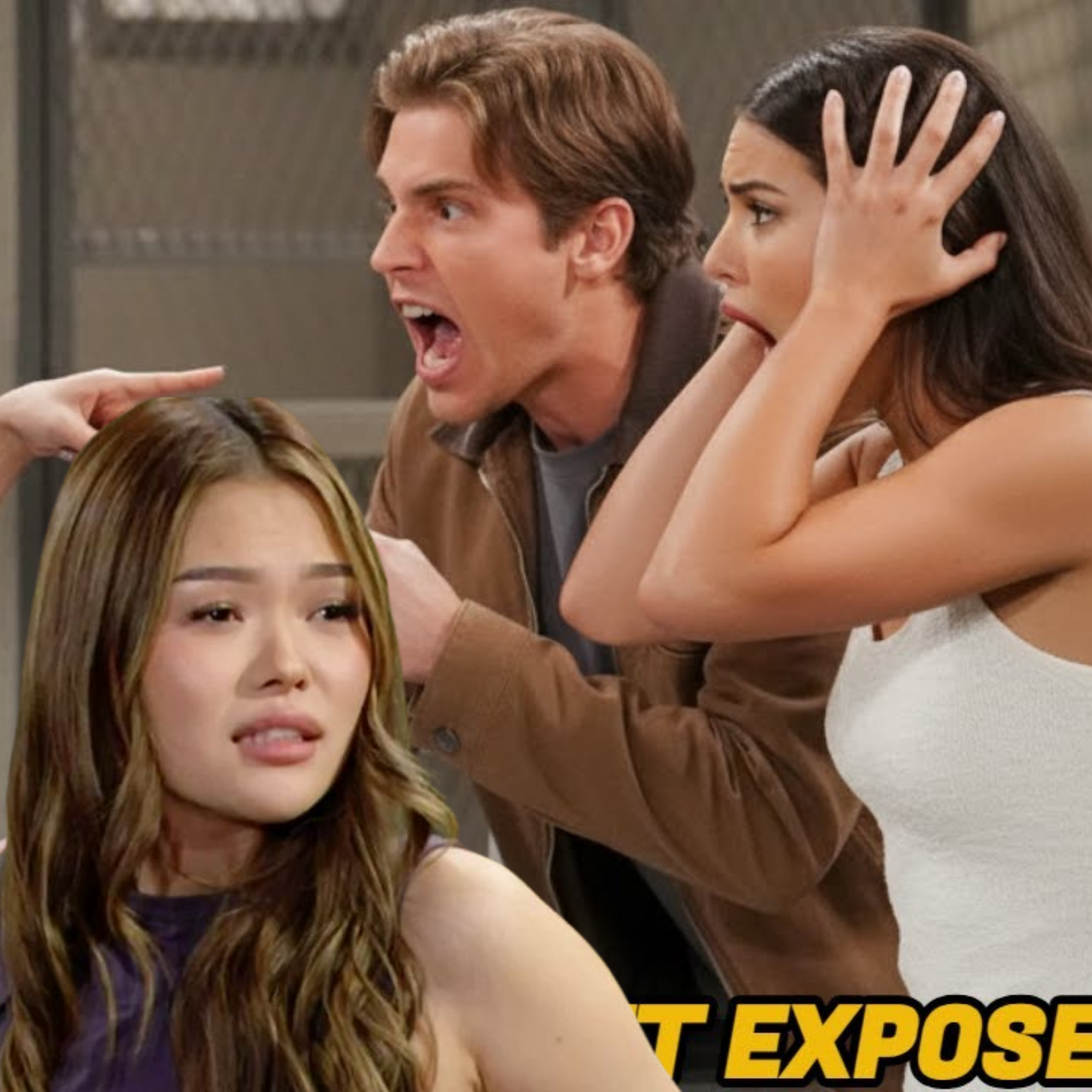
The Bold and the Beautiful Spoilers: Electra’s Killer Secret EXPOSED by Luna Nozawa’s Shocking Return!
In a city where reinvention is an art form and truth is often rewritten behind closed doors, The Bold and the Beautiful has detonated one of its most jaw-dropping twists yet. Just when Los Angeles believed it had buried one of its most dangerous ghosts, Luna Nozawa has returned from the dead—and she didn’t come back seeking forgiveness or sympathy. She came back with an accusation powerful enough to shatter lives, destroy reputations, and destabilize two of the most influential empires in the city. According to Luna, the woman responsible for her supposed “accidental” death is none other than Electra.
For months, Luna Nozawa’s name had been spoken in hushed tones, her death neatly packaged into a tragic but convenient narrative. Authorities ruled the late-night car crash an unfortunate accident—slick roads, bad timing, and a moment of distraction. The city mourned briefly, then moved on. Flowers faded, memorials ended, and with them, the sense of threat Luna once represented. Closure, it seemed, had arrived.
But death, in Luna’s case, was only an illusion.
Unbeknownst to everyone—friends, enemies, and investigators alike—Luna survived the crash. The wreckage was real. The fear was real. But so was the plan. In a move as audacious as it was calculated, Luna used the chaos of the accident to disappear completely, allowing the world to believe she was gone forever. By dawn, her greatest weapon was secured: invisibility.
From the shadows, Luna rebuilt herself. The impulsive, reactive woman many had dismissed was replaced by someone colder, sharper, and terrifyingly patient. Isolation gave her clarity. Time gave her strategy. And betrayal—especially from Will and Electra—gave her purpose. In Luna’s mind, abandonment was the ultimate crime. Not hatred, not rivalry, but erasure.
As months passed, Luna watched the world she left behind continue as if she had never existed. Will grieved, healed, and moved forward. Electra rebuilt her composure, her career, and her sense of control. To Luna, that peace was intolerable. They believed they had survived her. That belief would become their undoing.
Luna understood something crucial: revenge without leverage is noise. What she needed was power—real power—and she had it. During her time entangled in the worlds of Forester Creations and Spencer Publications, Luna had learned far more than anyone realized. She knew where secrets were buried: dormant clauses, shadow ownership structures, contingency agreements designed to protect dynasties—but vulnerable to exploitation if activated by the wrong person. Presumed dead, Luna held keys capable of shifting control over institutions that had ruled Los Angeles for generations.
But before she could deploy that nuclear option, Luna needed the spotlight—and she got it with a single, devastating move.
Her return was not dramatic. No press conference. No public plea. Instead, anonymous documents surfaced. Accident reports riddled with inconsistencies. Surveillance timestamps that didn’t align. Witness statements reframed with surgical precision. Each revelation alone raised eyebrows. Together, they formed a chilling conclusion: Luna Nozawa’s “accident” had not been an accident at all.
At the center of it all stood Electra.
When Luna finally emerged from hiding, she did so with terrifying calm—and one explosive accusation. Electra, she claimed, had tried to kill her.
The shockwave was immediate. Los Angeles reeled, not just because Luna was alive, but because her survival reframed everything. The night of the crash, once sanitized into tragedy, was suddenly drenched in suspicion. A private argument. Escalating tension. A moment where impulse overtook restraint. Luna didn’t need to spell out every detail. The implication was enough.
Electra’s world imploded.
Once known for her composure and competence, she became the epicenter of doubt. Colleagues avoided her. Conversations stopped when she entered rooms. Even those who wanted to defend her hesitated, unsure if loyalty could survive such a grave accusation. Electra denied everything—fiercely—but her desperation only fueled suspicion. Calm denials might have saved her. Frantic ones did not.
For Will, the fallout was catastrophic. He had mourned Luna, rationalized her death, and reshaped his life around her absence. Learning she was alive was destabilizing enough. Learning she accused Electra—someone he trusted, defended, and loved—fractured his reality. Memories once dismissed now returned with venomous clarity. He was forced to confront a horrifying possibility: had he chosen ignorance because it was easier than truth?
As investigators reopened the case, cracks in the original narrative widened. Emergency response timelines didn’t match. Witnesses were missing. Evidence once deemed irrelevant now looked deliberate. Each discovery tightened the net around Electra, pushing her closer to a reckoning she could no longer avoid.
Publicly, Electra fought back. She attacked Luna’s credibility, framing her survival as manipulation and her accusation as a power grab designed to destabilize empires. Some listened—especially those who feared what Luna’s secrets could unleash. But doubt, once planted, is stubborn. And Luna’s composed restraint contrasted sharply with Electra’s unraveling defenses.
Behind the scenes, Luna advanced the second phase of her plan.
With attention consumed by scandal, she quietly introduced evidence tied to her deeper secret—the one capable of shifting control over Forester Creations and Spencer Publications. The timing was flawless. Executives already rattled by legal exposure now faced existential threats to their authority. Alliances fractured. Old agreements resurfaced. Panic spread through boardrooms and legal departments alike.
Luna Nozawa was no longer reacting to the world. She was orchestrating it.
Whether Electra will ultimately be convicted, disgraced, or vindicated remains uncertain. But the damage is already irreversible. Trust has eroded. Power structures have cracked. And the illusion of permanence that once protected Los Angeles’ elite has been obliterated.
Luna did not return to reclaim her old life. She returned to end the one built on her silence.
Her greatest revenge was not survival—it was exposure. And as the city struggles to absorb the truth that Luna Nozawa is alive, one chilling reality has settled in: some deaths are more powerful when they are survived, and some accusations—once spoken—can never be buried again.