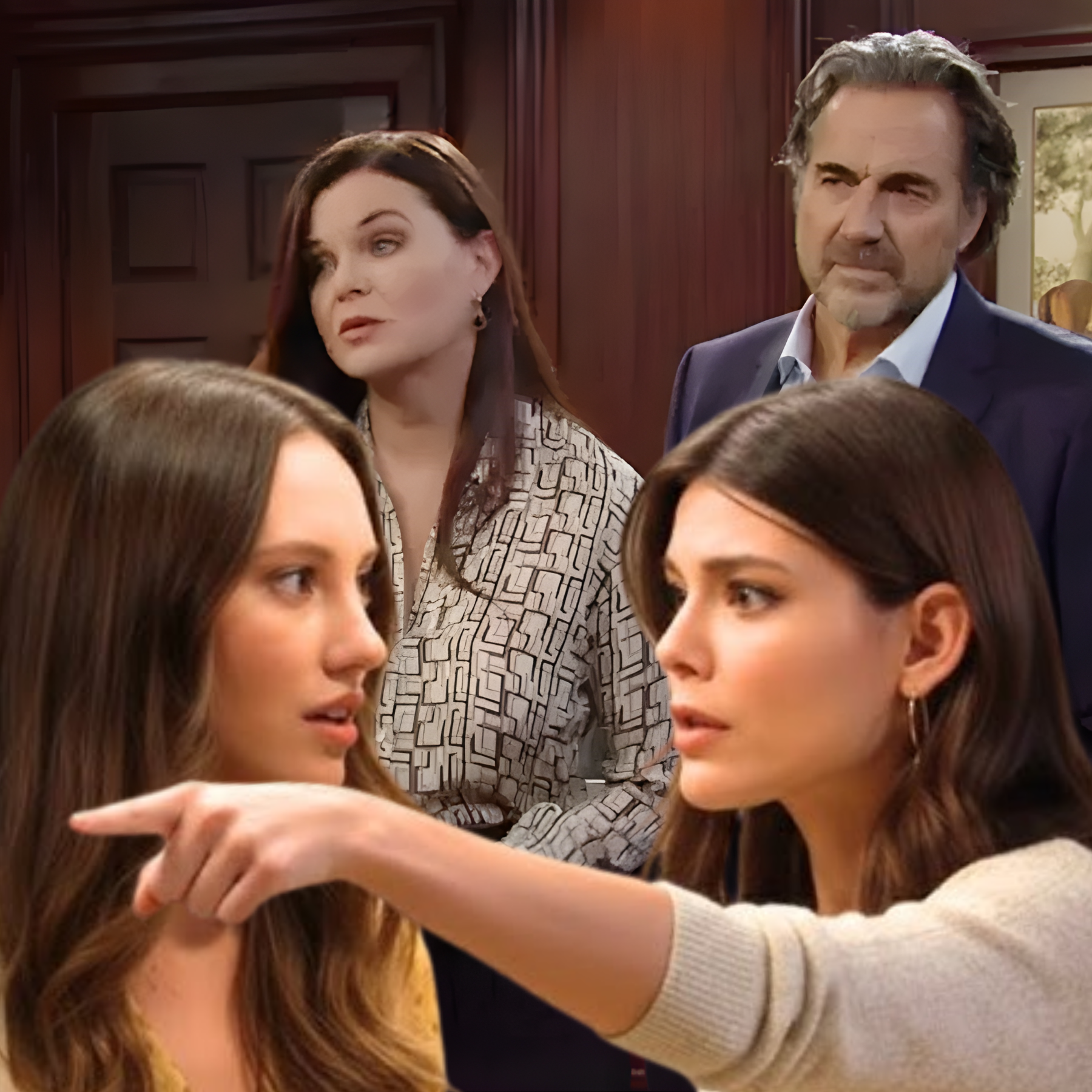
The Bold and the Beautiful Spoilers: Dylan’s Identity Crisis, Eric’s Shocking Final Confession
A confession that changed everything
The scene was cinematic and intimate: Eric Forester, fragile with age yet resolute, gathered the family in the mansion’s drawing room. The patriarch’s voice — roughened by illness but steady in its intent — delivered a truth no one anticipated. Dylan, the quietly talented art instructor who had quietly woven herself into Forester Creations, was not an incidental employee. She was family. More than that, Eric revealed, she was the stolen child from a long-ago crisis: Stephanie’s missing baby — taken at birth and erased from the family record.
Soap operas trade in secrets, but this one lands differently. It implicates decades of choices and suggests a history of deliberate deception that touches the family’s oldest wounds. The revelation — that a newborn stillbirth recorded to Stephanie decades earlier was a fraud, orchestrated through a black-market adoption scheme — lands like a bomb. The Foresters had grieved a baby who was in fact alive. That baby, grown and scarred by history, stood in their midst: Dylan.
Immediate fallout: grief, fury and fractured trust
The emotional fallout was instantaneous and brutal. Ridge, whose entire life has been defined by complex loyalties to both his father and the company, reacts with seismic anger. To discover that his conception of family was built around a lie — one that erased a member of their bloodline and allowed outside forces to alter their succession — collapses his world. Ridge’s fury is not performative; it is the raw, primal rage of a son who sees his father as both protector and betrayer.
Stephanie’s response is wrenching. The woman who once lost a child, who mourned and rebuilt, now faces a truth that reorients her entire history. The person she forgave for past harms — the figure who had shaped her trauma and resilience — turns out to be someone else’s child. Her earlier act of compassion toward Dylan, following the tragedy of Luna’s death, is suddenly recast in an almost unbearable light: the woman she forgave is not a stranger but kin. Compassion warps into confusion; solace into an ache that reopens old wounds.
Dylan is the human fulcrum of the drama. She arrived at Forester Creations as a professional — talented, earnest and discreet — unaware of the genetic ties that now bind her to the family she believed she served. Forced to confront the implications of Eric’s confession, Dylan’s identity fractures. The woman who had been defined by guilt and public scandal (following the Luna tragedy) is now confronted with a birthright she never wanted and a past she never chose. Her instinct is not triumph but disorientation. Who raised her? Who stole her? Why was this secret kept?
Evidence, history and the dark money trail
Eric’s confession did not come from thin air. The patriarch presented documents: altered medical records, adoption files, and a paper trail pointing toward a nurse, Margaret Hayes, and a black-market ring with reach into the family’s outer circles. As the investigation deepens, a more chilling implication emerges — this wasn’t a random abduction. It appears to have been orchestrated to protect financial interests, to manipulate inheritance and to silence a potential heir whose existence could have altered the company’s future.
This raises the stakes beyond a melodramatic family fight. It becomes a company crisis, a public relations nightmare and potentially a criminal probe. Forester Creations is more than a fashion house — it’s a global brand. When a company’s founding narrative is revealed to be riddled with conspiracy, partners, investors and clients take note. Boardroom maneuvering and legal maneuvering quickly replace couture sketches and runway fittings.
The human consequences: alliances reshaped
The power dynamics at Forester Creations shift almost overnight. Ridge’s first impulse is to protect the brand and his own claim to leadership, but his anger reveals a deeper fracture: he can no longer trust the scaffolding on which his ambitions are built. Stephanie, who always sought to reconcile family and business, now must reconcile painful personal history with corporate responsibility. She finds herself unexpectedly drawn to Dylan, though their relationship is not simple gratitude — it is complicated kinship forged in pain.
Dylan’s search for answers propels her into detective work. With Finn’s help, she traces Margaret Hayes’ paper trail and uncovers payments, shell donors and a sinister set of actors who conspired to erase her life. The discovery that figures connected to Forester business interests may have been involved stings with betrayal: this wasn’t merely cruelty — it was a strategic act of power.
And Eric, the man who has shepherded the family through decades of triumph and scandal, faces his final reckoning. His confession is an attempt at absolution, a last, terrible truth laid on the table as his health slides. But confession is not forgiveness. Family members react with a mixture of grief, disbelief and, in some corners, an unflinching hunger for accountability.
Where this arc is headed
Television thrives on long-form payoff, and this arc promises to deliver: legal battles, public hearings, corporate upheaval and the painstaking work of emotional repair. Dylan’s arc is both tragic and potentially redemptive: she can reclaim family ties and a role at Forester Creations, but only if the family can manage to integrate a woman who arrived with the baggage of both scandal and stolen childhood.
Ridge faces a choice every son of his stature must confront: double down on legacy control and risk alienation, or lean into humility and the messy work of rebuilding trust. Stephanie must reconcile her own past grief with the reality that she was denied the chance to raise a child. Eric’s final act — the confession — will either catalyze reconciliation or destroy the man he loved by association.
Why this matters
This storyline reaches beyond soap-operatic spectacle because it interrogates what we mean by family, identity and truth. It asks whether blood alone defines belonging, whether silence can ever be an act of protection and how institutions — even those that sell beauty — can be corrupted by secrecy. The arc reframes Forester Creations from a brand to a crucible in which personal and public morality are tested.
For fans, the drama delivers everything they crave: an emotional core, moral ambiguity, courtroom possibilities and runway repercussions. For the characters, it is a rare opportunity for genuine growth — if they choose it.
As the Forester estate continues to echo with the aftershocks of Eric’s revelation, viewers can expect legal fallout, tender reconciliations and the kind of messy healing that takes time — and courage. Dylan’s journey from outsider to heir is just beginning, and the ripple effects will determine not only who runs Forester Creations but who, at the end of this long season, remains a family.