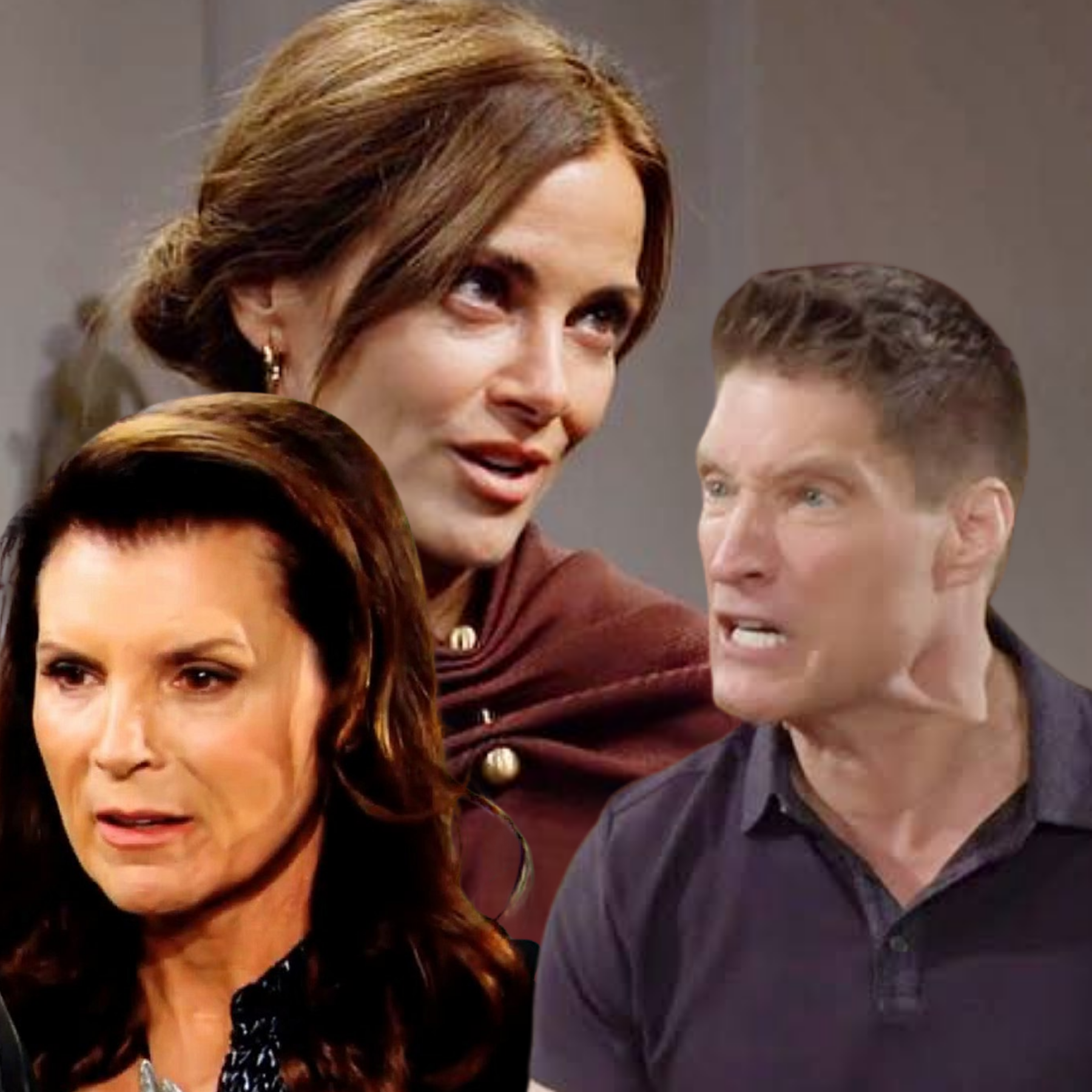
Bold and Beautiful Full Episode: Taylor Betrays, Deacon Picks
In a simmering story that reads like a classic daytime soap revenge play with a modern, emotional twist, The Bold and the Beautiful delivers one of its most combustible episodes yet: “Taylor Betrays, Deacon Picks.” The installment centers on an illicit emotional collision between Taylor Hayes (Rebecca Budig) and Deacon Sharpe (Sean Kanan) — a slow-burning attraction that erupts into a full-blown choice that will fracture alliances, test loyalties, and leave the canvas reeling.
This hour isn’t simply about a dalliance; it’s a study in consequences. The show smartly layers history, trauma and moral ambiguity so that when Taylor and Deacon cross the line, viewers are forced to grapple with who is to blame, and whether the wound that finally heals is worth the damage it inflicts.
A complicated chemistry fueled by shared wounds

Taylor and Deacon’s chemistry hasn’t happened in a vacuum. Both characters carry heavy baggage: Taylor bears decades of heartbreak, motherhood, and betrayals that still echo down her corridors of memory. Deacon carries his own history of crime, redemption arcs, and the stigma of past violence. It’s precisely those jagged edges that create a dangerous magnetic pull between them.
The episode opens with quietly charged scenes — two adults meeting in the middle of their vulnerabilities. Taylor arrives as a clinician and moral compass for a man trying to keep the pieces of his life from falling apart. Deacon arrives as the wounded, repentant husband who has watched his marriage with Sheila (Kimberlin Brown) degrade into toxic cycles and gaslit loyalties. She is the healer. He is the patient. The imbalance of power is textbook, but so is the authenticity of their emotional rapport.
The writers let them talk first. The dialogue is intimate, devoid of cheap flirtation; they exchange memories, fears and the small acknowledgements that carry a lot of weight. It’s in those confessions — Deacon admitting his terror of being abandoned, Taylor revealing how grief has hollowed her — that the line between therapy and intimacy begins to erode. This is a deliberate choice by the show: rather than a sudden betrayal, the audience witnesses a slow accumulation of moments that produce inevitability.
The first kiss: consequence, not catharsis
When they finally give in — a charged, quietly staged kiss in the dim light of Il Giardino — the series resists romanticizing it. The camera lingers not to titillate but to weigh. The fallout is immediate: Taylor’s conscience screams; Deacon’s guilt lands like a physical blow. Both know the unspoken truth — Sheila is not merely Deacon’s legal wife; she is a complicated antagonist with a violent, manipulative history that makes any betrayal morally fraught and potentially dangerous. That danger is part of what makes the choice seismic.
In a show with decades of history, the writers know the stakes. Taylor’s decision is positioned not as a moral lapse in a vacuum but as the climax to a long arc in which she has been systematically wounded by Sheila’s schemes — from past attempts on her life to more recent attacks on her family. The episode does not excuse Taylor’s choice; instead it asks the audience to consider whether vengeance, reparation, or simple survival can ever justify a romantic betrayal.
Family fallout: alliances splinter overnight
Word of the indiscretion travels fast — as these things do in soap operas — and the fallout is immediate and multifaceted. Ridge, Hope, Brooke and the Forester clan all react in quick succession, each bringing a different moral compass to the table. Ridge’s fury is a mix of paternal rage and wounded pride; he sees Taylor’s move as a betrayal of shared history and family codes. Hope is devastated: Deacon is embroiled in her world, and Taylor’s decision disrupts the delicate balance she’s been trying to maintain between forgiveness and self-protection. Brooke’s response is complex; she is loath to be cast as the villain in a generational chess match but cannot ignore the blow to her pride and sense of justice.
This is where the episode earns its dramatic weight: people don’t simply shout and storm out. The betrayal prompts quieter devastations — letters left unread, chairs at family dinners left empty, the kind of long-term, corrosive mistrust that changes the tenor of every room. Viewers are treated to several excellent performing moments, especially from Rebecca Budig and Sean Kanan, who convey regret, yearning and the gravity of consequence without slipping into melodrama.
Sheila’s revenge: remarkable restraint — for now
Sheila’s reaction is, predictably, devastating. Kimberlin Brown brings simmering menace to the part, but this episode’s arc refrains from giving her an immediate, explosive revenge. Instead, the show opts for the slow-turn approach: Sheila’s eyes narrow, a cold plan begins to form, and the audience understands that her next move will not be impulsive — it will be surgical.
That restraint is a smarter long game for the series. If the writers had elected to make Sheila explode immediately — a classic lunchtime confrontation or public scene — the moment would have been cathartic but short-lived. The real appetite here is for the daily drip of paranoia and retribution: whispered phone calls, subtle sabotages, and the kind of manipulation only Sheila can master. By leaving the threat implicit in this episode, the show ratchets suspense for weeks to come.
Deacon’s choice — and what it means
The heart of the episode is Deacon’s reckoning. He is not a callous seducer; he is a man who, after years of being pushed into ruin, finally recognizes the stability and tenderness Taylor offers. His choice to step toward her is less a betrayal and more an act of survival: a decision to exist in a life where he is seen and soothed. But the narrative makes it clear — survival does not absolve consequence.
Deacon’s choice is a mirror for the canvas: he is both the agent of change and the embodiment of chaos. His choosing Taylor sets in motion a chain reaction that will force characters to reassess who they are, what they value, and how far they will go to protect the life they think they deserve.
The long-term impact: a recalibration of loyalties
What truly elevates “Taylor Betrays, Deacon Picks” is that it refuses to treat the episode as a one-off shock. Instead, it points to long-term recalibration. Families fracture in slow-motion; business alliances wobble; and personal identities are challenged. Taylor’s action changes how she will be seen — not only as a healer but as a woman who chose herself. Deacon’s action changes him from repentant husband to a man willing to stake his future on a love that looks like refuge.
For the audience, the episode supplies exactly what soap viewers crave: moral complexity, high stakes, and human performances that force empathy even when judgment is irresistible. The betrayal is not played for cheap payoff; it is a moment that will ripple through the Forester-Logan-Spencer universe for months.
Verdict
“Taylor Betrays, Deacon Picks” is an episode that understands the emotional economy of long-form storytelling: it invests in character history, lets tension accumulate, and then makes the move that changes everything — not because it’s sensational, but because it feels inevitable. It’s messy, morally ambiguous, and deeply human. In other words: classic B&B — and utterly compelling television.