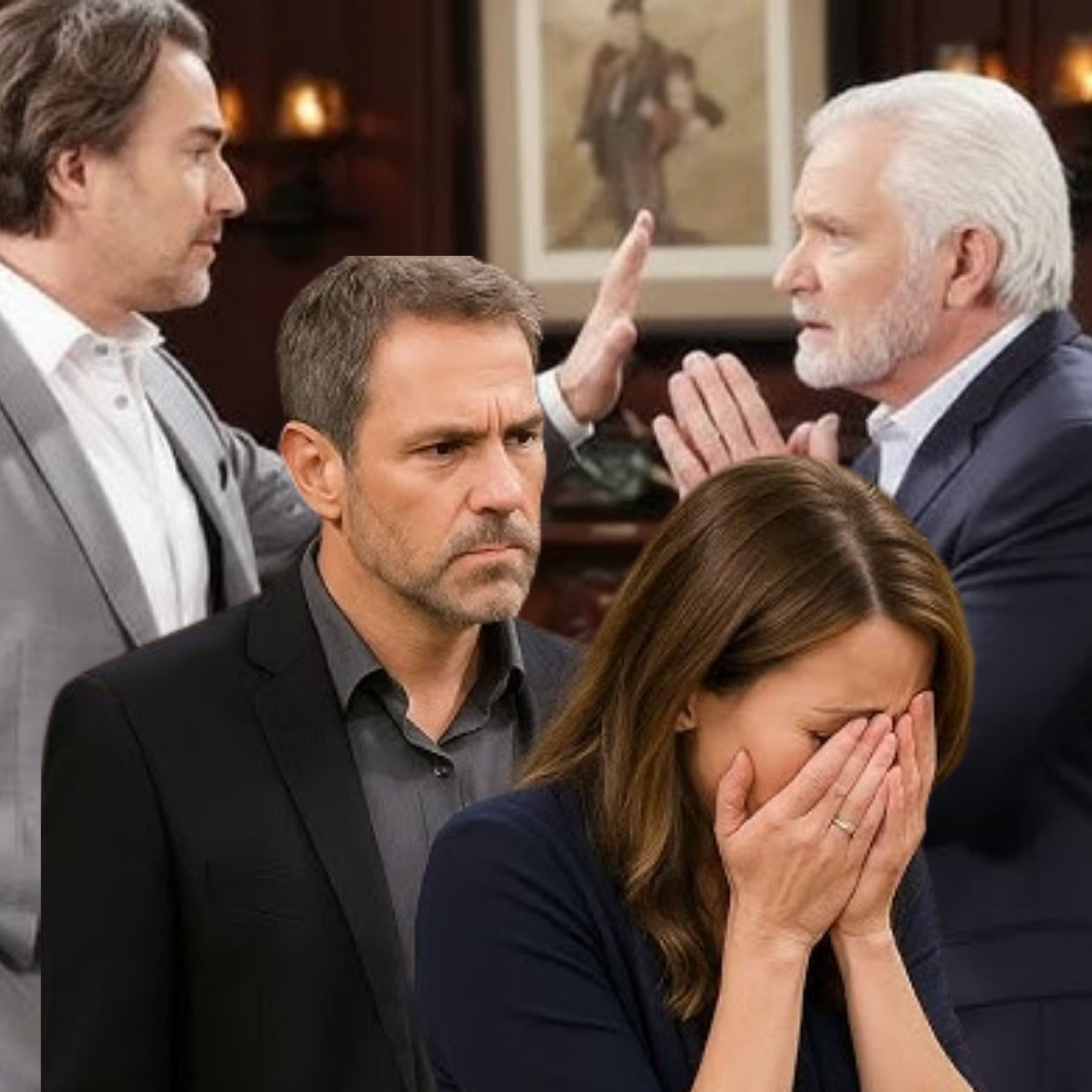
B&B Spoilers: “OLD MAN, …” — Ridge Coldly Gives the Shocking Reason He Refused Eric the Job
A single conversation at Forrester Creations has set off a chain reaction poised to crack the foundation of one of daytime television’s most storied families. On The Bold and the Beautiful this week, Ridge Forrester — the stubborn, brilliant designer who has long stood as the brand’s creative north star — shocked colleagues and viewers alike when he refused Eric Forester’s heartfelt request to return to the company floor. The bluntness of Ridge’s answer, the crack in a father-son bond, and the emotional fallout that followed have immediately become the week’s must-watch TV.
This wasn’t a routine business disagreement. It was an intimate collision of fear, love, guilt and legacy — and Ridge’s rationale cut sharper than anyone anticipated.
Eric Wants Back — For Purpose, Not Pride
After months spent recovering from a near-fatal health scare, Eric Forester finally felt strong enough to reengage with the life he built: a world of fabrics, fittings, and fierce opinions. For Eric, Forester Creations is more than a company. It is the physical manifestation of a life’s work — a place that gives him purpose, community and identity.
You could see it in his posture as he approached Ridge: not defiant, not demanding, merely earnest. Eric offered a measured proposal — nothing reckless. He suggested a limited role, mentoring younger designers and lending his seasoned eye to special collections. He emphasized the therapeutic element of being back among his people. After months of convalescence, Eric needed work in the way artists need air.
But he wasn’t prepared for Ridge’s refusal.
Ridge’s Cold, Calculated No
Ridge’s reply was devastating in its clarity. He told his father — calmly, almost clinically — that bringing Eric back to the company would be reckless. Not reckless for business, Ridge insisted, but reckless for Eric. “I can’t ask you to risk your life for a dress,” Ridge said, his voice even but implacable. He characterized Eric’s return to the floor as an invitation to the chaos that nearly killed him — long hours, stress, the emotional battlefield of the fashion world. Ridge made it clear he would not be the son who watched his father push himself back to the edge.
The words landed like a verdict. For Ridge, the priority was survival; for Eric, the priority was living. And that is where the tragedy of the exchange lies: both positions are loving, both positions are defensible, and both men believed they were doing the right thing.
Why This Is More Than a Workplace Dispute
On the surface, Ridge’s decision reads like a protective act. He is keeping his father safe, refusing to expose him to the pressures that might provoke a relapse. But the implications run much deeper.
Eric’s identity has always been tied to Forester Creations. To remove him from that world is to clip an essential part of who he is. Ridge’s choice — framed as love and responsibility — risks stripping Eric of agency. That possibility has already begun to reverberate in the corridors of the company and in the private rooms of the Forester home.
The drama here isn’t between a cautious son and an over-eager father. It’s a moral tug-of-war: How do you balance protection and dignity? Does preventing a loved one from doing what brings them joy really honor them? Or does it reduce them to a patient, someone to be watched and managed?
The Fallout: Alliances, Anger, and Guilt
The fallout is immediate and messy. Eric leaves the conversation stunned and wounded; his hands, those hands that once sketched empires, trembled with the realization that his son no longer trusts him to know his own limits. Ridge, meanwhile, walks away with his own private storm: the paralyzing fear of losing his father again.
At the office, loyalties begin to realign. Stephie views Ridge’s refusal through the lens of a co-CEO who must protect the company’s legacy and its people; she respects his judgment but sympathizes with Eric’s need for purpose. Brooke — forever the translator between men — is caught in the middle: she sees both a son’s fear and a father’s wounded pride, and her attempts to soothe both may simply deepen the rift.
Employees watch this familial rupture with nervous fascination. Designers and executives who revered Eric now wonder who will fill the paternal void he’s being forced into. Could this be the opening for a new creative leader to emerge? Or will the public spectacle of their patriarch being sidelined damage Forester’s image?
The Larger Consequences for Forester Creations
Ridge’s decision will not be contained to the kitchen table. Forester Creations is a brand built on a family mythology — the chip on someone’s shoulder, the spark of a sibling rivalry, the weight of legacy. When the founder is officially marginalized, investors and clients notice. Media chatter begins to suggest an internal crisis. Rival houses smell opportunity.
And then there’s brand identity. Eric’s name, his aesthetic, his story — they aren’t just personal; they are marketable. A world in which Eric fades into the background may cause customers and partners to question whether the company has lost its heart.
Character Stakes: What This Means for Each Player
- Eric Forester: Already fragile from his health scare, Eric risks slipping into existential despair. Stripped of the work that defines him, he may either retreat into bitterness or seek validation in dangerous places — perhaps aligning with outsiders or pushing for a symbolic re-entrance that defies Ridge’s wishes.
- Ridge Forrester: His refusal may be an act of profound love, but it also reveals his growing need to control outcomes. Ridge’s anxiety-driven leadership could alienate allies who see his decision as paternalism rather than care.
- Stephie Forester: As co-CEO and Ridge’s partner, Stephie is under pressure to keep the business intact while also managing the family. Her next moves will shape whether the split becomes a corporate crisis or a private reconciliation.
- Brooke and the Logans: Brooke will be forced to mediate; her influence might be the only thing that prevents public drama from turning into a sale or a takeover.
- The Creative Team: Designers and juniors will either rally to support Eric — mounting a campaign for his return — or quietly side with Ridge’s protective instinct. Either path reshapes internal alliances.
What Comes Next? Predictions and Possibilities
The Bold and the Beautiful thrives on sustained conflict, and this storyline is engineered for endurance. Expect the writers to explore multiple avenues:
- Eric quietly fights back — a clandestine mentoring program, guest consultations, or a public PR campaign that forces Ridge’s hand.
- Ridge doubles down — instituting policies that limit Eric’s involvement, which may spur legal or philosophical debate within the family.
- An external crisis — a scandal, a design theft or a health scare that proves Ridge right—or tragically, proves him wrong.
- A wild card return — an old ally offers Eric a separate platform or studio, forcing Ridge to confront whether safeguarding someone’s health must mean ceding their identity.
In the End: A Family at a Crossroads
This moment between Ridge and Eric is classic soap opera anatomy: personal stakes intertwined with corporate consequences. It’s intimate and epic, tender and brutal. Ridge’s cold refusal was not an attack; it was a decision born of fear. But in trying to protect his father, he may have cut the fragile thread binding generation to legacy.
No one on B&B will walk away unchanged. The question now is not only who will run Forester Creations — but who will be allowed to live the life they were born to lead.
Tune in this week: Ridge has drawn a line, and the consequences will echo through every seam of the Forester saga.