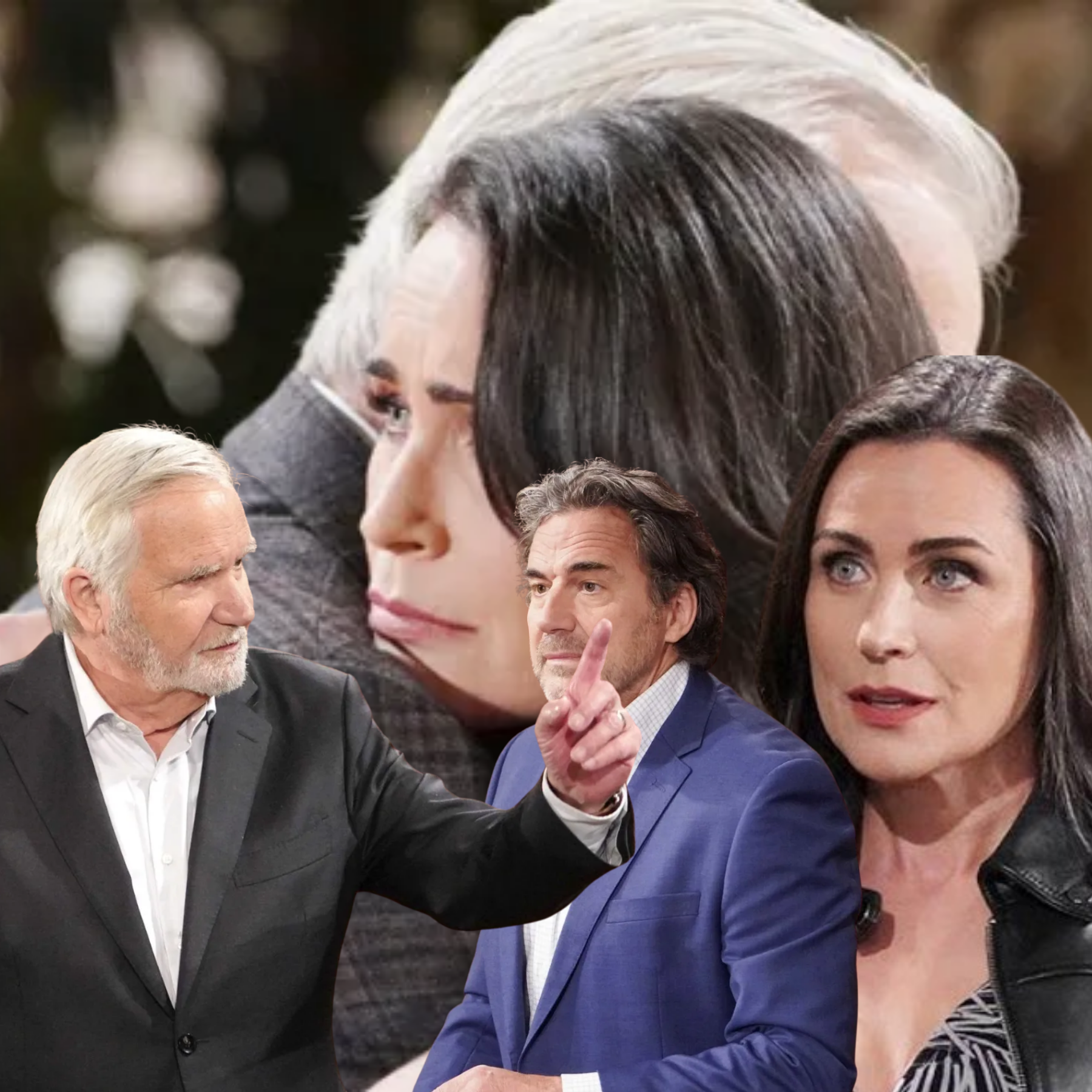
The Bold and the Beautiful Spoilers: Shocking Battle Between Eric and Ridge — Quinn Determined to Regain Property After Returning
Los Angeles wakes up to scandal this week as The Bold and the Beautiful turns its lens on a clash that’s equal parts family tragedy and corporate war. What begins as a hushed will reading in the dim warmth of the Forester mansion explodes into one of the most destabilizing power plays the show has staged in recent memory: Eric Forrester’s final testament upends expectations, sparks a brutal conflict with his son Ridge, and ushers Quinn Fuller back into the family fold — furious, strategic, and bent on regaining what she insists is rightfully hers.
This is not mere soap melodrama. It’s a carefully staged reckoning about legacy, love, and who gets to define what the Forester name really means.
Eric’s last act: a will that rewrites the script
The scene opens quiet and intimate: Eric, the aging patriarch whose name is synonymous with haute couture and family pride, signs the document that will change lives. But this is Eric at his most lucid and resolute. Rather than handing control to his natural heirs, he makes a radical decision designed to expose character rather than lineage. The will does not pass the crown to Ridge, Steffy or any of his children by default. Instead, stewardship will be entrusted to a guardian whose values match the spirit on which the company was built.
When the lawyer announces the name — Quinn Fuller Forrester — the room convulses. Quinn, once banished, returns not as a supplicant but as the person named in Eric’s final, irrevocable instructions. Even before any tests confirm parentage, the announcement is a seismic emotional blow: Pride, bitter memories, and old jealousies collide. Ridge’s disbelief turns to fury; Steffy’s composure fractures into open rage; Brooke’s heartbreak is equal parts bafflement and betrayal. For a family used to assuming succession as a birthright, Eric’s choice feels like a personal indictment.
Quinn’s return: power, poise, and proof
Quinn doesn’t arrive looking for sympathy. She’s composed, almost regal, and she carries a child whose resemblance to the Forester patriarch is impossible to ignore. The claim is incendiary: the baby is Eric’s biological heir. DNA later confirms it — a gut-punch that strips Quinn’s arrival of any opportunistic pretense and reframes it as the fulfillment of a secret that Eric alone seemed to honor.
Quinn’s strategy is surgical. She does not gloat. She presents herself as a guardian, not a conqueror, claiming a duty to protect the company’s soul. Her rhetoric — about creation over commerce, authenticity over expedience — lands as both a moral rebuke and a strategic narrative. It leaves the Foresters exposed: they had built their identity on tradition, but Eric’s last act insists that tradition requires a conscience as much as a signature.

Ridge’s rebellion and the legal war to come
Ridge’s reaction is visceral. For a man whose identity has been forged in his father’s shadow, the will reads like an erasure. He mobilizes immediately: lawyers are hired, alliances called in, boardroom tactics dusted off. This fight becomes about far more than money; it is a battle for agency, for the right to claim a legacy Ridge believes is his by birth and blood.
Steffy is equally invested. She views Quinn’s custody and guardianship as a direct affront to everything she has built, both at Forester Creations and in the public eye. Project Restoration, whispered meetings with former executives, and urgent strategies to buy back control are all set into motion. The law will be the stage, but the real theater plays out in whispers, press leaks, and social media. The family’s private grief is suddenly public spectacle.
Bill Spencer: strategist, predator, or kingmaker?
Never one to miss an opening, Bill Spencer circles. His interest is more than opportunistic; it is calculated. Bill recognizes the vacuum Eric’s revelation creates and sees an avenue to expand his own influence. Through carefully placed stories in the press and quiet purchases of key shares, he pressures the destabilized company while presenting himself as a stabilizing force. Bill’s moves complicate loyalties — Brooke, already torn, finds herself vulnerable to his flattery and tactical charm while Ridge snarls at the growing outside influence.
Bill’s intervention raises a question that extends beyond family drama: can legacy be preserved by money and force, or does stewardship require something different? Eric’s will implies the latter. Bill’s maneuvers claim the former. The tug-of-war sets the canon for what the Forester name will mean in modern Los Angeles.
Emotional fallout: fractures that cut deeper than legal papers
The corporate drama is only one layer. Underneath are family wounds that begin to bleed all over again. Brooke faces the most intimate betrayal; a letter from Eric reveals why he made his choice and forces her to confront the limits of the love she shared with him. Stephie endures a crisis of identity; her competence and morality both questioned, she wrestles with whether her ambition has cost the family its soul. Ridge, unmoored, contemplates exile rather than surrender, and his decision to leave Los Angeles opens a space Quinn fills: caretaker and architect of a future she insists will be right for the boy she holds.
Donna becomes the quiet moral center: pragmatic, loyal to the truth, and painfully aware that the company’s survival requires more than a court ruling. Finn and Steffy feel the strain in their marriage as loyalty to family and truth collide. Hope and the younger generation watch the elder fight over history — a cautionary tale about what is sacrificed on the altar of legacy.
Quinn’s determination: regaining property, redefining legacy
Quinn’s return is not passive. She moves quickly to stabilize Forester Creations and to shore up legitimacy. Her first public act — a collection named Resurrection — reframes the narrative. By blending artistic daring with a calming public presence, she begins to win back critics and skeptics. But she also eyes the property and the company’s assets with a plan: to secure what she believes Eric entrusted to her, and to protect the child whose parentage is the fulcrum of the whole dispute.
Where Quinn differs from past antagonists is in her language of stewardship rather than conquest. Her aim is to build, not merely to score a victory. That doctrine will put her at odds with Ridge and company, but it also positions her as a surprising agent of continuity — if she can survive the court of public opinion and the more dangerous legal courts to come.
What this means for viewers: a long arc with high stakes
This storyline is not a single blow but the opening salvo in an extended battle that blends courtroom drama, family tragedy, corporate intrigue, and the messy human cost of legacy. Expect courtroom showdowns, boardroom betrayals, and intimate scenes that force each character to reckon with what they value most: power, love, or truth.
For Bold and the Beautiful, naming Quinn the guardian of Eric’s legacy is a bold narrative pivot. It asks viewers to reconsider alliances and to watch characters they thought they knew face a moral mirror. The episode poses a blunt question: who deserves to carry a name forward when the past is both luminous and tarnished?
One certainty remains: nothing in Los Angeles will be the same. The Forester mansion has been cracked open, and what spills out will determine not just who runs a fashion house, but who gets to claim the heart of a family. The war over Forester Creations is only beginning — and Quinn, newly returned and unmistakably determined, intends to be more than a footnote in its history.